Mother's ring
The mother's ring is a modest heirloom that becomes a decisive instrument in Nathaniel's psychological undoing. Given to him by his mother when he left home to study in the city of G., the ring is meant to symbolize the enduring bond of family and, implicitly, his future marriage to Clara. Yet Nathaniel, in the grip of his obsession with Olympia, repurposes this token of filial and romantic fidelity for a deluded betrothal to a lifeless doll. The ring's journey from a cherished keepsake to a prop in a catastrophic delusion encapsulates the story's central theme: the fatal substitution of the real by the artificial.
Origin and Symbolic Weight
The ring enters the narrative as a gift from Nathaniel's mother at his departure for university, a tangible link to his home and his promised future with Clara. It carries the emotional weight of maternal blessing and the expectation of a natural, loving marriage. For years it remains in Nathaniel's desk drawer, a dormant symbol of the life he is meant to return to. Its significance is established not through description but through the context of its giving: it is the one object his mother entrusts to him as he steps into the wider world, a silent promise of return and continuity.
The Ring's Fatal Retrieval
After Spalanzani gives Nathaniel tacit approval to pursue Olympia, Nathaniel resolves to propose. He searches for the mother's ring to offer as a symbol of his commitment to their 'budding, blossoming life together.' In a moment of profound symbolic blindness, he rifles through his desk, finds Clara's and Lothar's letters, and flings them aside with indifference. He pockets the ring and rushes to Olympia. This act of discarding the letters—the written evidence of his real attachments—while seizing the ring for a false union marks the point of no return. The ring, meant to seal a true marriage, is now carried toward a counterfeit one.
The Ring and the Revelation
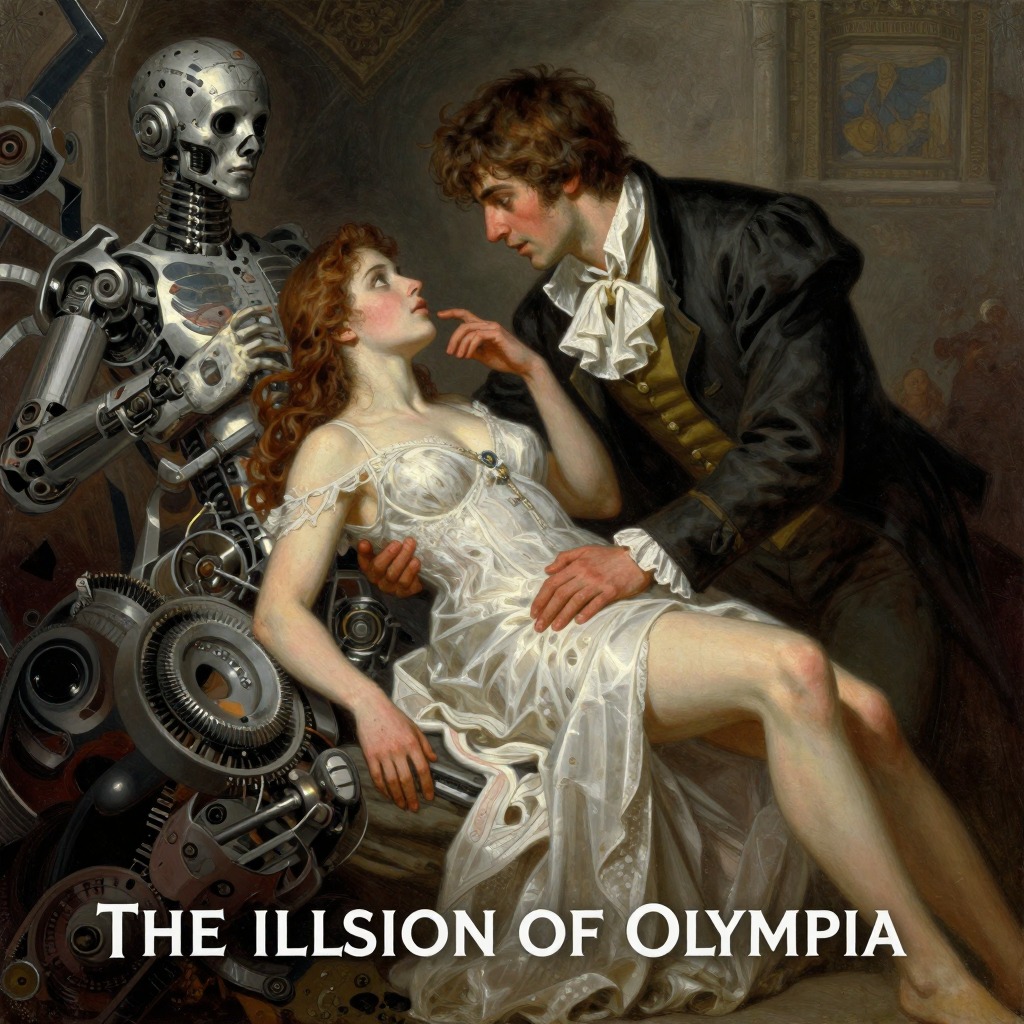
Nathaniel never gets to place the ring on Olympia's finger. When he bursts into Spalanzani's study, he finds the Professor and Coppola locked in a violent struggle over Olympia's body. In the chaos, Coppola yanks the automaton free and swings it at Nathaniel, knocking him backward over a work table. The table shatters, and among the wreckage of phials, retorts, and measuring glasses, Nathaniel sees Olympia's eyeless wax face. Spalanzani, bleeding from glass cuts, hurls a pair of bloody eyes at Nathaniel's breast. It is at this moment that madness seizes him. The ring, still in his pocket, never reaches its intended recipient. Its purpose is annihilated in the same instant that Olympia is unmasked as a machine. The ring's failure to complete its journey—from pocket to finger—marks the precise point where Nathaniel's delusion shatters and his reason collapses into raving insanity.
Thematic Significance
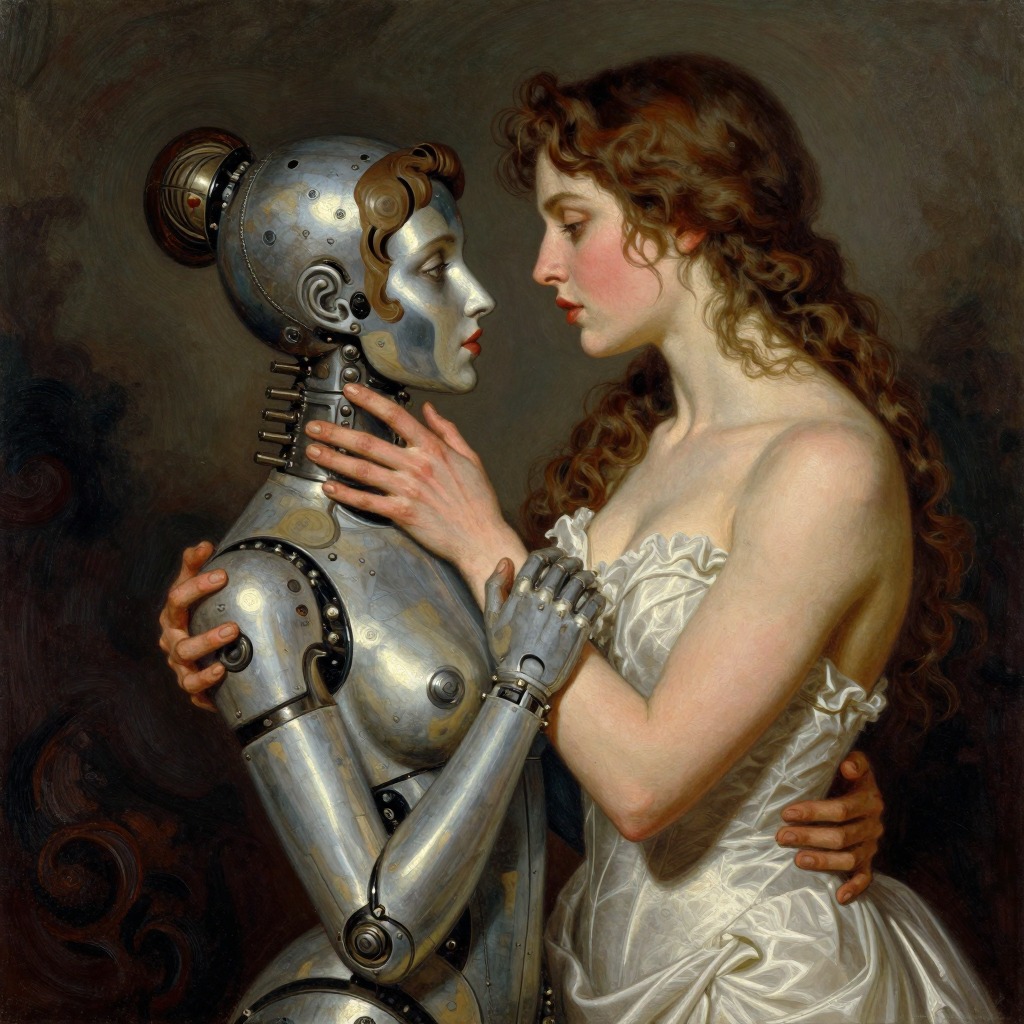
The mother's ring functions as a material hinge between two incompatible worlds: the domestic, affectionate realm of Clara and the mechanical, deceptive realm of Olympia. Nathaniel's decision to carry it to Olympia represents his final, willful rejection of the real in favor of the simulated. The ring's fate—unused, ungiven, rendered meaningless by the revelation of the automaton—mirrors the story's broader critique of a culture that cannot distinguish between the organic and the artificial. It is an object that, in its failure to perform its intended function, exposes the catastrophic consequences of misplaced desire. The ring remains, in the end, a silent witness to the tragedy: a token of love that was never bestowed, a promise that was never made, and a bond that was never formed.